
What should you check Before Buying a Cash Counting Machine in India | Maxsell

Cash Counting Machine: Manual vs Machine Cost & Error Guide
April 8, 2026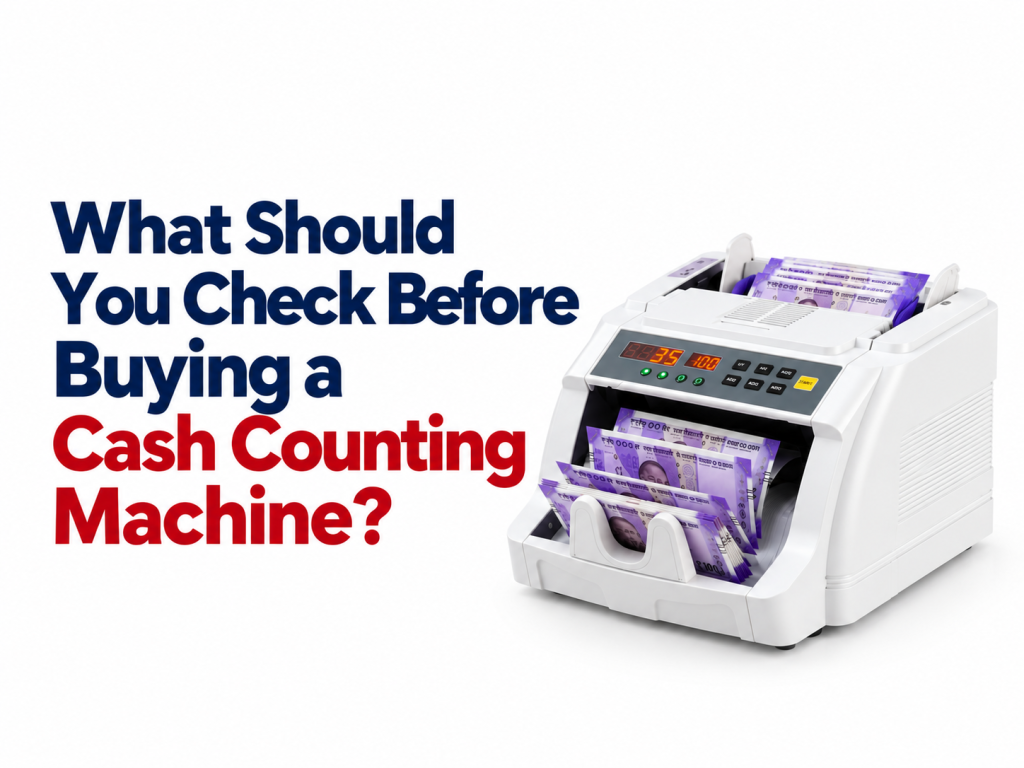
What Should You Check Before Buying a Cash Counting Machine?
Buying a cash counting machine is not just about finding the lowest price. The right machine should provide accurate counting, reliable counterfeit detection and consistent performance.
Quick Answer
- Check the counterfeit detection technology.
- Check the motor and roller quality for regular use.
- Choose between a piece counter and a value counting machine.
- Check whether the machine supports software updates.
- Consider warranty and after-sales service before buying.
1. Check the Counterfeit Detection Features
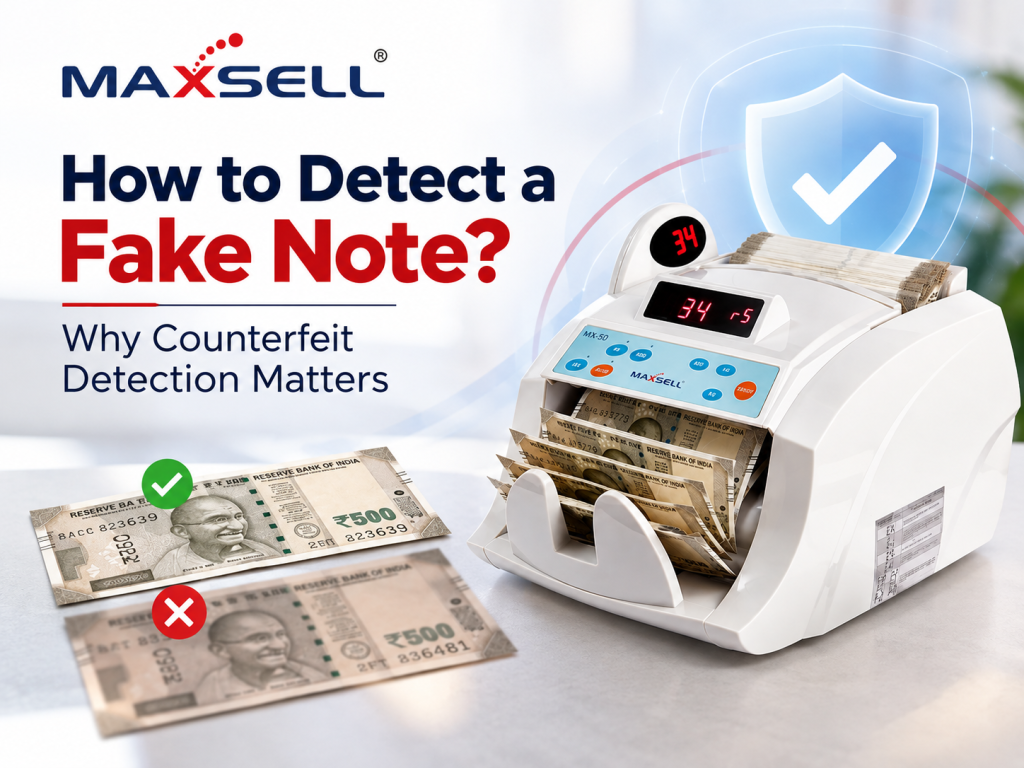
The sensors are one of the most important parts of a cash counting machine. Different machines use technologies such as UV, MG, IR and MT detection to identify suspicious notes.
UV and MG Detection
UV detection checks specific ultraviolet features of a note, while MG detection checks its magnetic properties. The quality and sensitivity of these sensors can vary between machines.
IR and MT Detection
IR detection checks infrared characteristics, while MT detection checks the magnetic thread of the note. These technologies provide additional levels of counterfeit detection.
Dual-CIS Technology
Dual-CIS technology uses Contact Image Sensors to scan both sides of a note. It is available in selected Maxsell Matrix models for advanced note verification.
2. Check the Motor and Roller Quality
A machine needs reliable mechanical components for regular use.
A heavy-duty motor is important for businesses that count large volumes of cash. Good-quality rollers should also handle new, old, oily and worn notes without frequent jams or double-note errors.
3. Choose the Right Type of Counting Machine
Before buying, decide whether you need simple piece counting or a machine that can calculate the total value of different denominations.
- Piece Counter: Counts the number of notes.
- Value Counter: Counts notes and calculates their total value.
- Note Sorter: Counts, verifies and sorts notes based on different requirements.
If your business handles multiple denominations such as ₹100, ₹200 and ₹500, a value counting machine can make cash handling easier.
4. Check for Software Updates
Currency designs and security features can change over time. A machine that supports software updates can be updated when required.
Check with the manufacturer whether updates are available through USB, cable or an authorised service engineer.
5. Consider the Condition of Indian Currency
Cash counting machines used in India may need to handle notes that are old, dusty, oily, folded or worn.
Good-quality rollers and feeding mechanisms help reduce problems such as double notes, chain errors and jams.
6. Check Warranty and After-Sales Service
The purchase price is only one part of the overall cost. Before buying, check the manufacturer’s warranty, service availability and access to spare parts.
For businesses that depend on daily cash handling, access to trained service engineers can help reduce downtime.
Cash Counting Machine: What Should You Compare?
| Feature | What to Check |
|---|---|
| Detection | UV, MG, IR, MT and other available detection technologies |
| Counting | Piece counting or value counting |
| Motor | Suitable for your daily cash volume |
| Note Handling | Ability to handle old, worn and soiled notes |
| Updates | Availability of software updates |
| Service | Warranty, service network and spare parts |
Frequently Asked Questions
Why does cash counting machine price vary?
Price can vary based on counting type, sensor technology, motor quality, features, build quality and after-sales support.
How do I choose a cash counting machine for a small shop?
Consider your daily cash volume and whether you need piece counting or value counting. Also check counterfeit detection and service support.
Is Dual-CIS useful in a cash counting machine?
Dual-CIS scans both sides of a note and can provide additional information for note verification. It is available in selected advanced machines.
Can cash counting machines detect counterfeit notes?
Machines with counterfeit detection features such as UV, MG, IR and MT can help identify suspicious notes. Available detection technologies depend on the model.
Should I buy a piece counter or value counter?
A piece counter is suitable when you only need the number of notes. A value counter is more useful when you regularly handle multiple denominations and need the total value.
Conclusion
When choosing a cash counting machine, look beyond the purchase price. Check the detection technology, counting features, motor and roller quality, software updates and after-sales service.
Choosing a machine based on your cash volume and business requirements can help you achieve faster and more reliable cash handling.


2 Comments
hello world
hello world
Good write up